

Most of us fidget without even thinking. For example, you might click a pen while studying, tap your feet during a meeting, or play with something on your desk when you're waiting.
This natural habit turns into something more intentional when using fidget toys. You get a simple activity while you wait, listen, work, or take a break.
However, the question is: do fidget toys actually help, and how do fidget toys help in the first place? It totally depends on the nature of the person and the situation. According to Brown University Health, fidget toys are tools that provide auditory, visual, or tactile input and may support self-regulation or concentration.
What Are Fidget Toys?
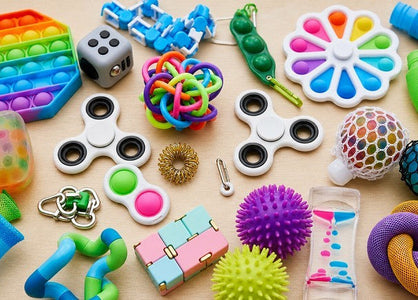
Fidget toys keep your hands busy, as they are small objects that allow simple movements like twisting, squeezing, spinning, or clicking. They can provide sensory or tactile feedback while you wait, work, study, or simply feel restless. Since everyone has a different response, the best fidget toy is the one that feels natural and comfortable to use.

How Can Fidget Toys Help?
Fidget toys give you a simple activity while you wait, work, study, or deal with a restless or stressful moment. These toys are best viewed as optional tools rather than treatments; moreover, one fidget toy may not work well for another person.
Help With Focus and Attention
For some people, it becomes really easy to focus when their hands are occupied and busy. A simple fidget toy allows you to move your hands without removing your attention from listening, reading, studying, or working. This is really where fidget toys for focus earn their reputation, since the hands stay busy while the mind stays on task.
Support Self-Regulation
Fidget toys help you with a repetitive motion that in turn helps you focus on something. This is especially useful when you are overwhelmed or restless. Rotating, squeezing, or clicking a fidget toy can help reduce stress and help you feel settled in the moment.
Fidget Toys for ADHD, Anxiety, and Stress
People with ADHD find it more useful to use fidget toys. The reason is that fidget toys help them stay engaged. Fidget toys are also considered useful for anxious or stressful moments. It is important to know that these toys are not a treatment for ADHD. They are simply possible tools that can support kids facing ADHD.
Sensory Needs and Autism
Every person has different sensory preferences. Some people might like certain textures or movement, while others might prefer resistance or pressure. It is important that you choose a fidget toy based on your preferences. Choosing a fidget toy simply because it's popular is less effective compared to choosing it based on your sensory preferences, which is exactly why fidget toys for sensory needs are worth thinking about separately from fidgets picked just for focus or stress.

Different Types of Fidget Toys
Clicker Fidgets
Clickers are predictable and simple fidget toys. You simply press one section, feel the movement, and repeat. People who love repetitive finger movement enjoy clicker fidgets during working, studying, or long periods of sitting.
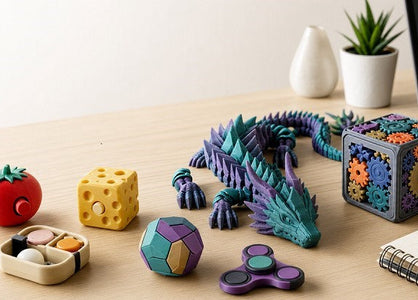
Nexbie's Fidget Toys have several clicker-style designs that give a more playful twist to this popular movement. You don't press the same plain button again and again. Instead, you get geometric designs and food-inspired designs with different surfaces and sections to interact with.
This fidget is appealing due to its small details, such as a short mechanical response, a firm press, and a shape that feels natural and comfortable to use. The simple interaction is more convenient for everyday use than a larger sensory toy. It's useful, especially when you want something you can pick up and put down without paying much attention.

Spinner Fidgets
Spinners are one of those toys that offer continuous, smooth movement and require very little effort. Spinner fidgets are suitable for people who want repetitive motion while waiting, studying, or reading.
Geometric and Mechanical Fidgets
Mechanical and geometric fidgets usually involve shifting or rotating different sections. As a result, they give you different movement than a basic clicker. These fidgets are a really good option for people who love mechanical feedback or want something they can also fit naturally on a desk or shelf.
Articulated Fidgets
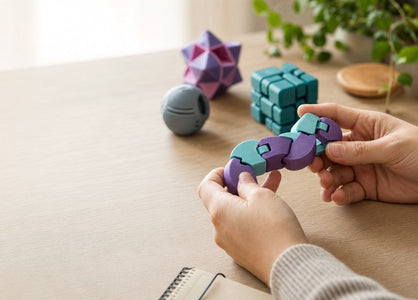
Articulated fidgets come with connected sections that reposition, twist, and bend. These fidgets are suitable for people who want changing movement instead of one repeated action and can also double as playful desk or shelf pieces.
Squeeze and Flexible Fidgets
Squeeze and flexible fidgets are suitable when you want to focus on larger hand movements and resistance. These fidgets are an ideal choice for people who prefer stretching, bending, or squeezing rather than spinning or clicking.
Frequently Asked Questions
Q: Do fidget toys actually help with focus?
These fidget toys may help some people stay engaged during activities that involve long periods of listening or sitting. However, they come with different effects, and if you get a distracting fidget, it can have the opposite effect.
Q: Can adults use fidget toys at work?
Yes. Many adults love to use fidget toys while studying, working, or attending meetings. You can also get quieter fidget toys for shared spaces.
Q: Are fidget toys good for kids?
Kids can use fidget toys during travel, homework, or waiting. However, make sure that you are choosing an age-appropriate product and following the manufacturer's safety recommendations and instructions.
Q: Can a fidget toy make concentration worse?
A fidget toy can also have an opposite effect when it has a visually stimulating or noisy design. In that case, you should prefer a simpler fidget toy.
Q: How do I know which fidget is right for me?
This really comes down to how to choose a fidget toy in the first place: consider the movement you enjoy and where you will use it. Try experimenting with different styles until you find the one that feels natural, useful, comfortable, and easy to incorporate into your routine.
Conclusion
Fidget toys are simple tools that serve different purposes. These toys can give you sensory input or a useful outlet for movement, while for other people they can simply be fun to use.
There is no single perfect fidget toy for everyone. The right choice of a fidget toy depends on the movement you like, the environment where you will use it, and whether the toy helps without causing distraction.
From simple clickers and spinners to Nexbie's articulated and food-inspired designs, there are plenty of ways to find a fidget that fits your routine.