

You might have heard about both sensory toys and fidget toys before. Maybe it was a squishy toy in a child’s backpack, a small spinner on a desk, or a textured object your friend kept in their hand.
Fidget toys and sensory toys are often treated as the same thing, and honestly, it’s easy to see why. Both toys involve sensory feedback, movement, and touch. However, there is a small difference between them.
In other words, sensory toys are more about the type of sensory experience they provide, and fidget toys are more about providing movement. So, there is a lot of overlap between them, though, and one toy can easily do both jobs.
What Are Fidget Toys?
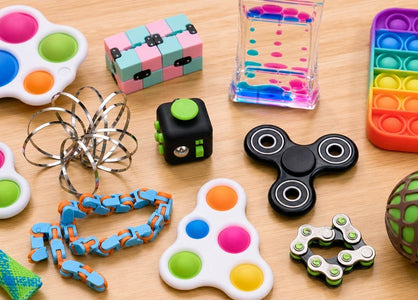
Fidget toys keep your hands moving by being small objects. You might twist, spin, click, or manipulate them while listening, working, studying, or waiting.
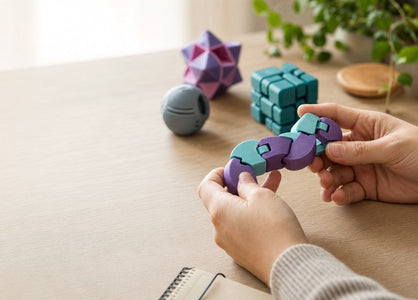
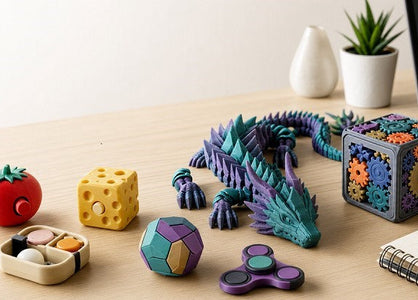
A spinner gives you continuous movement. A clicker provides a press-and-release sensation. An articulated design changes as you reposition it by bending it. For example, Nexbie’s 3D printed fidget toys collection includes articulated figures, geometric designs, and clickers, so they can give you an experience ranging from a simple repeated motion to more varied hand movement.

What Are Sensory Toys?
You get a specific sensory experience through specific sensory toys. The main focus of these toys is touch, but resistance, pressure, sound, texture, movement, and even visual feedback are also involved.
Think about the difference between running your fingers across a textured toy and squeezing a ball. Both of these objects give you sensory input; however, they feel completely different when you touch them.
It highlights that you choose a sensory toy based on personal preference. One person may prefer something textured, flexible, or soft, and another person may enjoy strong resistance.
Fidget Toys vs Sensory Toys: What's the Difference?
If you understand the main purpose of a toy, you can easily understand the difference.
|
Fidget Toys |
Sensory Toys |
|
Focus mainly on movement |
Focus mainly on sensory feedback |
|
Often used while doing another activity |
Often used for direct sensory exploration |
|
Usually small and portable |
Can range from small handheld toys to larger sensory products |
|
Clicking, spinning, twisting, or moving are common |
Texture, pressure, resistance, sound, and movement can all matter |
Of course, sensory toys and fidget toys can overlap when it comes to these categories.
A squishy ball appears to be both a fidget toy and a sensory toy. You get repetitive movement through an articulated figure while also getting tactile feedback within your fingers.
Therefore, instead of pulling every toy into a strict category, it is important to think more about what the toy is used for and what it feels like to experience it.
How Can Fidget And Sensory Toys Help?
Fidget toys often help with ADHD, stress, and focus. However, they are best viewed as optional tools rather than treatments for these conditions.
Fidget Toys for Focus
Have you ever tried doodling during a lecture and realized that you were focusing more attentively?
For some people, having a simple hand movement during lectures, meetings, or presentations helps them stay engaged and more focused during activities that require prolonged sitting or listening. A quiet fidget is a suitable choice in that moment without demanding much attention.
Therefore, fidget toys are easy to use and simple when used for engaging and focus. A quiet mechanical fidget or a small spinner can work well because you can experience it without constantly looking at it.
You don’t have to force concentration through a fidget toy. The simple goal is to give your hands something to do while your attention stays on the main task.
Fidget Toys for Self-Regulation
Sometimes you are feeling restless, and you don’t need help focusing. During that time, a repetitive movement gives your hands something predictable to experience. It can be rotating, squeezing, or clicking a fidget to cause a small sensory routine that seems easier to control and familiar.
That’s one of the reasons fidget toys can be useful in situations where someone is overstimulated or overwhelmed.
Sensory toys
When the type of physical input matters, sensory toys become useful.
Maybe you love squeezing something with noticeable resistance. Maybe you also love raised or rough textures. Or you can also prefer slowly manipulating an articulated object.
Some people can better focus on an activity as it becomes engaging or comfortable while using these toys.
Sensory toys are not made for a single age group. Kids can use them during quiet time or playtime; however, adults love to use tactile objects on a desk or at home.
The idea is simple: experience the different types of sensory feedback that keep you focused and make you feel good.

How to Choose Between Fidget Toys and Sensory Toys
You don’t need to overthink the labels. Think about what you want to experience.
Choose a fidget if you mainly want:
-
Repetitive movement
-
Something small and portable
-
A toy you can use while doing something else
-
Simple hand activity
Choose a sensory toy if you mainly want:
-
A particular texture
-
More pressure or resistance
-
Stronger tactile feedback
-
A hands-on sensory experience
If you want to feel both experiences, look for an interactive design that combines tactile feedback with movement.
It also matters where you are planning to use that specific toy. A loud clicker is a suitable toy to use at home, but it is not an ideal object for the office or classroom.
Fidget Toys vs Sensory Toys: Frequently Asked Questions
Q: Are fidget toys and sensory toys the same thing?
Sensory toys and fidget toys are not exactly the same thing. Fidget toys focus on hand movement, while sensory toys focus on sensory experiences such as sound, resistance, pressure, texture, etcetera. However, there are many toys that can give you both experiences.
Q: Which is better for classroom use?
A compact and quiet fidget toy is suitable for a classroom, as it would not create distractions or noise. However, the best choice depends on what kind of sensory input your child prefers.
Q: Can one toy be both a fidget and sensory toy?
Yes, exactly. Many interactive toys provide both experiences, such as tactile feedback and repetitive movement. Mechanical and articulated designs are good examples of toys that sit between both categories.
Q: How do I know which one is right for me?
Think about your preferred enjoyment experience. Try a fidget if you want continuous, repetitive movement. If you want a specific resistance, pressure, or texture, a sensory toy may be more suitable. You can also choose a design that combines both experiences.
Fidget Toys vs Sensory Toys: Conclusion
There is no clear winner when it comes to comparing sensory toys and fidget toys.
Sensory toys focus more on the type of sensory feedback they offer. On the other hand, fidget toys are more focused on movement; however, these two categories might overlap, and many toys can offer both experiences.
Think about the type of sensory feedback you need instead of choosing based on the label. Do you want to keep your hands engaged, or do you want a specific pressure, texture, or physical sensation?
Once you know that, choosing the right toy becomes much easier. Also, consider whether you end up with a tactile sensory toy, a simple spinner, or a 3D-printed design that combines both. The best option is the one that feels enjoyable, natural, and comfortable in everyday life.