

There's a good chance you have a puzzle lying around your house right now. Puzzling has made a big comeback in recent years, with folks using it for stress relief, a screen-free way to relax, you name it. But that begs an honest question: are jigsaw puzzles good for your brain, or is that just a warm fuzzy feeling with no real backing? To find out, we looked at the research on puzzles and brain health, including how puzzles compare to other brain-training activities. Here is what the evidence really says.
Why Are Puzzles Good for the Brain
Before we get into benefits, it helps to know what's really going on in your head as you puzzle.
What Happens in Your Brain When You Solve a Puzzle
Every piece you pick up makes your brain work in several ways at once. You're scanning shapes, comparing colors, and predicting where a piece might go. That's not one skill. It's a few, working together.
Key things your brain does while puzzling:
- Visual-spatial processing: recognizing shapes, edges, and how pieces fit together
- Working memory: remembering piece locations and image sections in your head
- Pattern recognition: spotting small differences in color, shape, and texture faster over time
- Planning and strategy: deciding whether to sort by edge, color, or section first
That's the short answer to why are puzzles good for the brain: these mental building blocks add up fast. You're not just passing the time. You're exercising your entire brain without even realizing it.

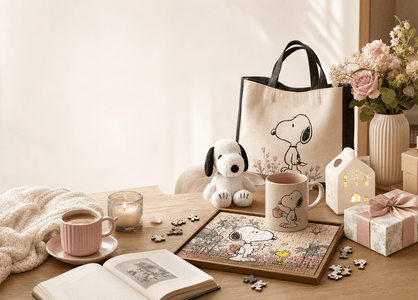
Puzzle brands have picked up on this too. Nexbie, for example, makes wooden jigsaw puzzles with detailed, nostalgic designs, including a Peanuts Snoopy collection. The more engaging the image, the longer you stay focused, and the more these cognitive skills actually get used.
Benefits of Puzzles
So can puzzles help your brain beyond a single session, or is any lasting benefit just wishful thinking? Research says the benefit is real, especially with regular use. Here are the main benefits of puzzles, backed by real studies.
Do Puzzles Improve Memory?
Yes, and this one is backed up by research. In a large study, University of Exeter and King's College London researchers tracked more than 17,000 adults aged 50 and over. Regular puzzle solvers scored as if they were 10 years younger on cognitive tests. The biggest gains were in memory and reasoning.
A second clinical trial, from Columbia and Duke University, pitted crossword puzzles against computer-based brain-training games in older adults with mild memory problems. The puzzle group came out ahead over 78 weeks. This was a randomized trial, not a casual survey, so the result is harder to shrug off.
Another smaller study published in Frontiers in Aging Neuroscience looked at jigsaw puzzles specifically. Adults aged 50 and above who puzzled daily for 30 days had improved visuospatial memory and reasoning.
Do Puzzles Reduce Stress and Anxiety?
This is where puzzles for mental health really come into play, and plenty of puzzlers already know it firsthand.
One survey found that almost four in 10 adults turn to puzzles to help them deal with stress. That's quite a lot to be achieved by just putting pieces together.
Part of it comes down to a mental state called "flow." That's when you're completely absorbed in something difficult but achievable. Your mind stops bouncing from thing to thing, and background worry fades out.
Puzzling tends to reduce stress for a few reasons:
- No screen, so your eyes and brain get a break from notifications
- It has a clear goal that gives a sense of progress
- No timer or scoreboard, which keeps the pressure low
- Works alone or with company, whatever you need
Should You Actually Rely on Puzzles for Brain Health?
This is really the heart of whether are jigsaw puzzles good for your brain in a lasting way or just in the moment. Puzzles help. How much depends on a few things:
- Consistency: One puzzle a year isn't going to do much. It's the ongoing habit that provides real cognitive benefit.
- Difficulty level: A puzzle that's too easy stops challenging your brain. Increasing piece count over time keeps the benefit going.
- Who's doing them: Older adults tend to see the cognitive benefits.
- What else you're doing: Puzzles work best alongside good sleep, movement, and social connection, not as a replacement for them.
So all in all, this is the honest answer to how much puzzles and brain health are connected. There is a real link, and more than one study backs it up, but it works best as part of a larger routine, not as a stand-alone fix.
Puzzles Designed to Keep You Engaged
Since consistency matters most, the puzzle itself matters too. It's easier to stick with something you actually enjoy.
Nexbie's puzzle lineup leans into this. Their wooden Peanuts Snoopy puzzles bring a nostalgic, well-loved theme to the table. It's made with sturdy wooden pieces that hold up over repeated use, which matters if you're building a regular puzzling habit rather than a one-off activity.
FAQs
Q:Are jigsaw puzzles good for your brain as an adult?
A:Yes. Jigsaw puzzles improve memory, reasoning and concentration in adults through visual-spatial processing and working memory. Research also links them to reduced stress through a focused “flow” state, especially when used regularly.
Q:Are jigsaw puzzles good for an aging brain?
A:Research suggests yes. Regular puzzle-doers have been found to experience slower age-related decline in memory and reasoning. This isn't a sure-fire way to prevent cognitive decline, but it's a low-risk habit with real evidence to support it.
Q:What kind of puzzles are best for your brain?
A:The best puzzle is one you'll actually finish. Start around 500 pieces and work up as it gets too easy. A theme you enjoy, like the Snoopy Peanuts puzzles from Nexbie, makes it easier to stay consistent.
Q:Are online jigsaw puzzles good for your brain?
A:They offer some of the same benefits, especially pattern recognition and planning. Physical puzzles add a hands-on element digital versions can't fully match, since sorting and handling pieces adds extra spatial engagement.
Q:Do puzzles help with cognitive abilities?
A:Yes. Puzzles engage memory, attention, spatial reasoning, and planning at the same time. The effect is stronger with regular use, not just an odd session here and there.
Conclusion
So, are jigsaw puzzles good for your brain? Yes, the research says. They improve memory, support reasoning, and give your mind a real break from stress. If you've been wondering whether puzzles for mental health actually work, the evidence says they do, especially when it becomes a regular habit and not just a one-off activity.
So to put it simply, can puzzles help your brain in a lasting way? The research says yes, but consistency is what makes the difference. None of this takes hours a day or costly equipment. Choose a puzzle that you'll actually enjoy finishing, make it a habit, and the rest follows. And if you're wondering whether jigsaw puzzles are good enough for your brain to be worth your time, research says it's one of the easiest habits to start today.